
Soft Maple
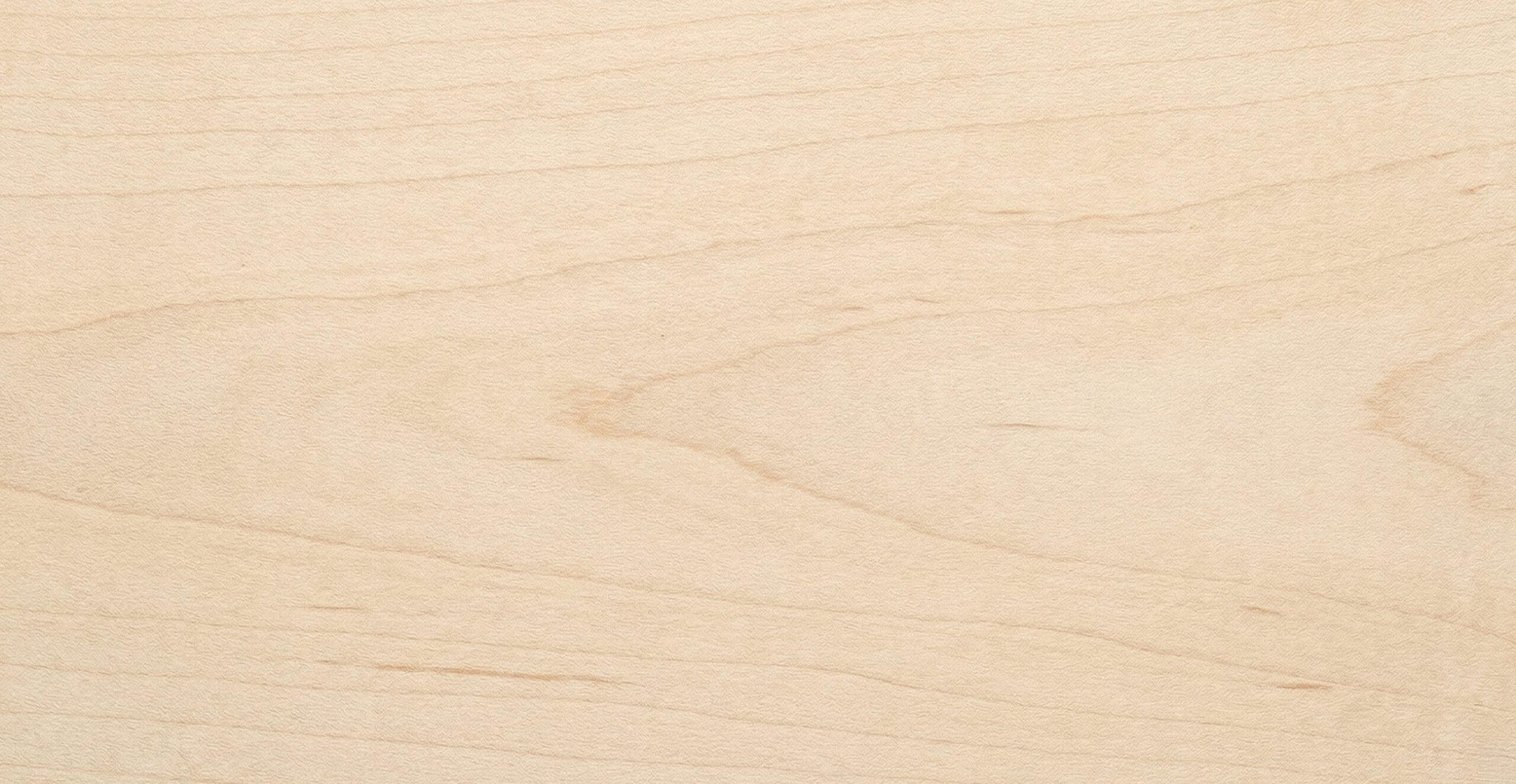
Soft maple delivers a similar light, clean aesthetic to hard maple with easier workability and a more accessible price point. The soft maple group includes red maple (Acer rubrum) and silver maple (Acer saccharinum), both native to the eastern United States. For furniture, cabinetry, and millwork where a maple look matters more than maximum surface hardness, soft maple is a practical and beautiful choice.
Characteristics
Acer rubrum / Acer saccharinum (Aceraceae (maple family)), a Hardwood (angiosperm). Also known as Soft maple, red maple, silver maple.
Soft maple is often visually indistinguishable from hard maple to most observers. The sapwood is nearly white to light golden or reddish brown, with a fine, even texture and generally straight grain that can occasionally show wavy or curly figure. Growth rings tend to be lighter and less distinct than in hard maple. The overall effect is the same pale, clean, contemporary surface that makes maple appealing for modern interiors, though soft maple may show slightly more color variation between heartwood and sapwood.
Indoors, soft maple is used for furniture, cabinetry, mouldings, decorative trim, veneer, and general woodworking where a maple aesthetic is the goal. Outdoor suitability: not recommended, as soft maple has minimal natural decay resistance. A practical choice when the design calls for a light maple look without the premium of hard maple.
Performance and Strength
At roughly two-thirds the hardness of hard maple, soft maple is easier to machine, less prone to burning with high-speed cutters, and more forgiving to work with overall. Red maple, the harder of the two primary soft maple species, weighs approximately 38 pounds per cubic foot dried and has a Janka rating of 950 lbf. Silver maple is about 10 to 15 percent lighter and softer than red maple. Both species glue well, accept stains readily, and are less responsive to humidity changes than hard maple, which can be an advantage for wider panels and furniture in variable environments.
| Property | Value | What It Means |
|---|---|---|
| Janka hardness | 700 to 950 lbf | Easier to machine than hard maple but more prone to denting |
| Specific gravity | 0.47 to 0.54 | Moderate density keeps parts lighter and easier to handle |
| Volumetric shrinkage | 10 to 12% | Generally more forgiving than hard maple in service |
| Modulus of rupture | 9,500 to 11,800 lbf/in² | Adequate for furniture components |
Where It Comes From
Red maple is one of the most common trees in eastern North America, growing from Nova Scotia to Florida and west to Minnesota and Texas. Silver maple is similarly widespread, favoring lowlands and river valleys. Both species are commercially abundant, which keeps pricing favorable compared to hard maple. We source soft maple through the same regional Pennsylvania mill network we use for our other domestic hardwoods.
Typical harvest age: Red maple and silver maple are relatively fast-growing species by hardwood standards. Trees reach harvestable size in 40 to 70 years depending on site conditions. Their abundance means consistent supply at competitive pricing.
Sourced regionally through our domestic hardwood supply chain in Pennsylvania. Soft maple’s commercial abundance keeps it readily available in the widths and grades furniture projects require.
Cutting and Drying
Soft maple is sawn using the same methods as hard maple: plain-sawn for wider boards and cathedral grain, rift and quarter-sawn for straighter figure and improved dimensional stability. The wood is easier to dry than hard maple, with less tendency toward internal stress and checking. For slab work, we follow our standard protocol: air-dried for up to 18 months, then kiln-dried for a final three months.
Recommended Finishes
- Water-based clear: Preserves light color with durable protection.
- Hardwax oil: Natural look, refreshable.
- Lacquer: Polished film for indoor use.
Soft maple finishes similarly to hard maple, though it tends to accept stain more evenly due to its slightly more porous structure. Water-based clear coats are the best option for preserving the pale, natural color. Oil-based finishes will add warmth and amber over time. As with hard maple, waterborne topcoats can raise the grain, so plan for de-nibbing coats and controlled sanding between applications.
Browse all options in our finishes guide.
Care and Maintenance
Daily Care
- Dust with a soft, dry cloth or microfiber.
- For routine cleaning, use a slightly damp cloth, then wipe dry.
- Avoid abrasive sponges and harsh chemical cleaners, especially ammonia-based or silicone-containing products.
- Wipe spills promptly. Use coasters and trivets for heat and water protection.
Environment
- Maintain indoor humidity around 40 to 60 percent to reduce seasonal movement in solid wood.
- Avoid placing the piece near heating vents, fireplaces, or prolonged direct sunlight.
Maintenance Schedule
- Oil-finished surfaces: Refresh (clean, lightly abrade if needed, reapply oil) once or twice per year depending on use.
- Film-finished surfaces (water-based clear, polyurethane, lacquer): Clean gently. Refinish generally only after visible wear or damage.
Repair
- Oil systems: Minor scratches can often be blended by light sanding and re-oiling.
- Film systems: Small scratches may be spot-repaired. Deeper damage may require sanding and refinishing the affected area.
Outdoor Furniture
- Outdoor exposure increases stress on finishes.
- If maintaining original color: plan periodic UV-protective oiling (often annually). Otherwise, allow natural silvering and focus on cleaning and inspection.
- Avoid pressure washing. High-pressure water can erode surface fibers, increase splintering, and shorten finish life.
For more details, see our care and maintenance FAQ.
Sources
- USDA Wood Handbook, Chapter 2: Soft maple group properties
Related Wood Species
Hard Maple
Hard maple is one of the densest, hardest domestic hardwoods available and the species we reach for when the design calls for a lighter palette without sacrificing surface performance.
Spalted Maple
Spalted maple is not a separate species.
Ambrosia Maple
Ambrosia maple, sometimes called wormy maple, is not a separate species.
Birch
Birch is a strong indoor furniture wood with a light, fine texture and good machining response.
Beech
Beech is a heavy, hard domestic hardwood with fine uniform texture and exceptional steam-bending properties.
Browse All Wood Species
Compare 21 species by appearance, durability, and best applications.
Start Your Project
Tell us about your space and we will help you choose the right materials.